Why the best Sunday roast starts with a fire
A Sunday roast is meant to take its time. There’s the first cup of tea while you decide when to light the charcoal. The quiet work of getting the fire established. The moment the meat goes on and you realise lunch will be ready when it’s ready.
Cooking a roast over charcoal makes the whole day part of the meal. It gives you the steady heat you need to cook a joint gently, with the option to finish over a hotter fire for a crisp, browned exterior. It also brings a subtle flavour that belongs to the cooking process itself. The charcoal you choose plays a part in how that roast turns out.
Why roast over fire?
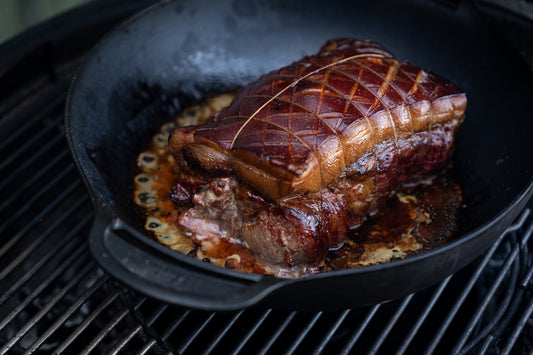
A good roast needs two things: time for the inside to cook evenly, and enough heat to develop colour on the outside. Charcoal lets you do both. Set the fire to one side of a kettle barbecue, or use a deflector in a kamado, and the meat can roast away from the direct heat. Move it closer to the coals towards the end if it needs more colour.
That slower cook gives you time to pay attention. You can turn the joint, check its temperature and add vegetables when the moment is right. Meanwhile, juices drip onto the coals and the fire lends its character to the food. It needn’t be an intensely smoky roast. Often, the best result is a gentle hint of fire that lets the meat taste like itself.
Know your fuel
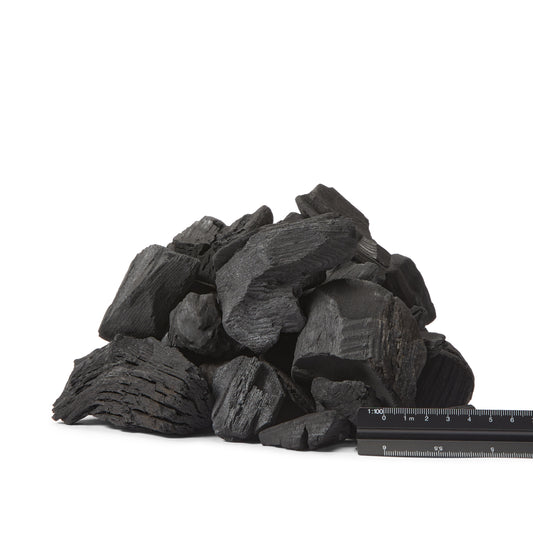
Different charcoals behave differently. Some light quickly and bring the heat for a crisp finish. Others burn steadily for the hours a larger joint needs. Our Charcoal Comparison Guide is a useful place to start when choosing fuel for the cook you have in mind.
 For a long, unhurried roast, hornbeam is a favourite. It burns slowly and consistently, with a mild smoke that sits comfortably alongside lamb, poultry, pork or beef. Beech is another patient fuel: slightly slower to light, but steady once it gets going, with a subtle flavour that suits low and slow cooking.
English oak offers a long burn with heat you can control as the roast develops. It produces a clean, delicate smoke, making it a versatile choice for everything from beef and pork to chicken. Mixed British charcoal is a dependable all-rounder when you want a clean burn and a mild smoke that leaves the ingredients in the spotlight.
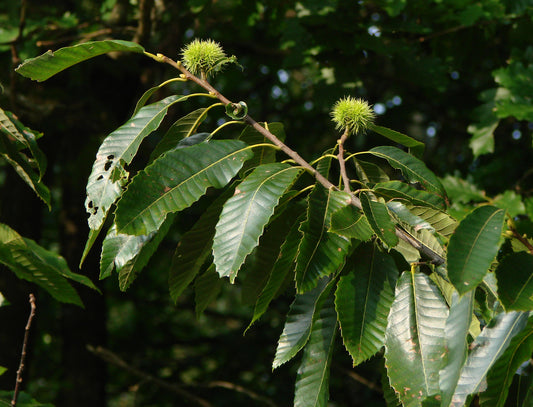
If you want to build heat more quickly, ash lights readily and responds well to airflow. It can carry you through a gentle roast and give you the higher heat needed for a final sear. Chestnut is quick to light and burns hot, with a light, sweet character. We like it when there’s lamb or chicken on the menu and a little colour is part of the plan.
There’s no single charcoal for every Sunday. Think about the size of the joint, how long it needs and the flavour you want alongside it. You can also use a steady-burning charcoal for the main cook and add a little quicker-burning fuel when it’s time to bring the heat up.
Make a Sunday of it
Light the fire early. Let the charcoal settle before the meat goes on. Give the joint space to roast away from the fiercest heat, and use a meat thermometer to judge when it’s cooked to your liking. Then let it rest properly while you finish the potatoes, vegetables and gravy.
That’s the pleasure of a roast over charcoal. You’re involved from the first flame to the last slice, but there’s no need to hurry any of it. The fire sets the pace. The food brings everyone together. And even when the air turns cooler, there’s every reason to keep Sunday cooking outside.
Know your fuel. Light the fire. Take your time.