A major new investigation by The Independent has taken a closer look at something most of us give remarkably little thought to: the charcoal we cook over. House of Charcoal founder James Doyan spoke to Food Editor Hannah Twiggs for the piece, which explores where Britain’s charcoal comes from, how transparent its supply chains really are and why provenance matters just as much beneath the grill as it does on top of it.
James is the first to admit that he didn’t always think this way. Before starting House of Charcoal, his view was much the same as most people’s: “I just thought charcoal was charcoal.”
It was only when he started researching the industry that he began to understand how little he knew about what was actually in a bag, where the wood had come from or how it had been produced. He also began to question the strange disconnect between the care we put into choosing food and the relative lack of thought we give to the fuel used to cook it.
One encounter has stayed with him. James watched a customer spend around £400 on steaks at a north London butcher, then cross the road to buy cheap instant-light charcoal. He gave him a bag of his own to try instead. Later that evening, the customer messaged to say his wife had eaten his barbecue for the first time in 25 years because the steaks didn't taste metallic.
It is, of course, one customer's experience. But the wider point resonated with James: people will spend significant amounts of money sourcing great ingredients and then treat the fire underneath them as if it has no bearing on the result.
Looking beyond the bag
Hannah's investigation goes much further than James's own experience. She spoke to the National Coppice Federation, examined research into international charcoal supply chains, certification and regulation, and looked at the environmental and working-condition concerns that have been documented in some charcoal-producing regions.
One of the most interesting findings came from The Independent's own review of online information for 10 popular charcoal products sold by major supermarkets. None identified where the wood used for conventional charcoal had been harvested, and none named the tree species.
That's a remarkable lack of information for a product made from wood, particularly at a time when consumers are increasingly encouraged to think about provenance in almost every other part of their shopping basket.
The article also looks at a regulatory issue British charcoal makers have been raising for years. Charcoal is not currently covered by the UK Timber Regulations in the same way as many other timber products, where importers are required to establish information including species and country of harvest and assess the risk of illegal logging.
It means that answering the apparently simple question “Where did the wood in this bag come from?” can be much harder than you might expect.
Why we chose British
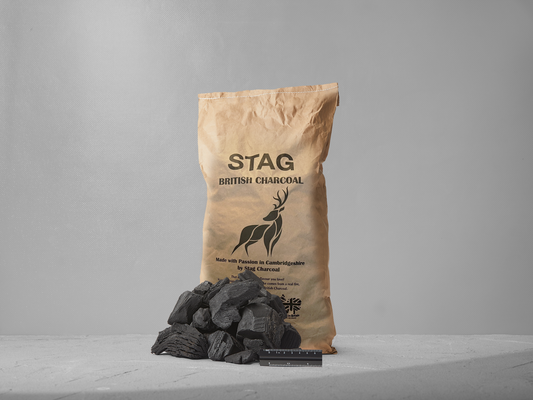
When James began House of Charcoal, getting closer to the source became fundamental to the business. We chose to work with British producers making charcoal using wood associated with managed woodlands, coppicing, thinning and other woodland management here in the UK.
It wasn't the cheapest route. As James acknowledges in The Independent, British charcoal can cost considerably more than imported alternatives. But reducing the decision to the price of a bag misses much of what gives the product its value.
British charcoal provides a market for suitable wood arising from woodland management and supports the people and skills involved in making it. For us, it also means having a direct relationship with producers. We can talk to the people making our charcoal, understand the wood they're working with and know where the product we sell has come from.
Then there's the reason most people are lighting charcoal in the first place: the food.
Different woods and charcoals behave differently when you cook with them. They can give different levels and durations of heat and require different approaches to managing the fire. It's why we've spent so much time working with chefs and cooks to encourage people to stop seeing charcoal as an anonymous heat source and start thinking about the fire as part of the recipe.
If provenance matters to the ingredients on the grill, we think it's reasonable to ask why it shouldn't matter to what's burning underneath them too.
A bigger conversation
Eventually, it became clear to James that this needed to be a bigger conversation than House of Charcoal could — or should — have on its own. That led to the launch of Back British Charcoal, a national awareness campaign supported by Grown in Britain and the National Coppice Federation.
The campaign isn't about claiming that all imported charcoal is bad, or that simply putting a British flag on a bag makes something good. It's about giving people a reason to stop and ask questions about a product that has largely escaped the scrutiny we now apply elsewhere.
Hannah's investigation shows just how much there is to ask.
Where did the wood come from? Where was the charcoal made? What does the producer tell you about it? And if you have the opportunity to choose charcoal made here in Britain, what might that choice help support?
Towards the end of the piece, James borrows a principle that has become familiar in conversations about food: “Eat less meat, but better sourced. Use less charcoal, but better sourced.”
That's probably as good a summary of our thinking as any.
We don't expect everyone to become a charcoal expert. We'd just like more people to look at the bag and care about what's inside it.